Blue Habitat Blog
Balancing Living Biomass and Anthropogenic Mass
07/10/2026 - By: Kaitlyn Broussard
Set out to do a physical weigh-in of the planet, researchers at the Weizmann Institute of Science published a 2020 groundbreaking study in the journal Nature, calculating the weight of all living biomass, including every tree, animal, bacterium, etc., and weighed it against everything humanity has built, the anthropogenic mass.
The results show that we have officially hit the crossover point. As of 2020, both sides of the scale registered at 1.1 teratonnes (1.1 trillion metric tons).
At the start of the 20th century, the anthropogenic mass amounted to just 3% of global biomass. But since the 1950s, our production has doubled roughly every 20 years, and currently, each week, a mass greater than their own body weight is produced for every person on the planet.
We aren't just crossing this line because we’re building more, but also because we’ve cut nature in half. Deforestation and land-use changes have decreased the planet’s total plant biomass from 2 teratonnes down to roughly 1 teratonne.
We can no longer view the natural world as an infinite, boundless resource. Because our material footprint is now heavier than the biosphere itself, we have to start treating our socioeconomic system as a major, physical driving force of the planet and actively slow down the literal flow of raw resource consumption.
Refusing and reducing the demand for new physical objects, involves buying higher-quality items built to last, fixing electronics and appliances instead of upgrading them, and supporting local repair businesses. We can vote with our wallets by supporting circular brands, companies that build products designed to be completely taken back and remade at the end of their lifecycle.
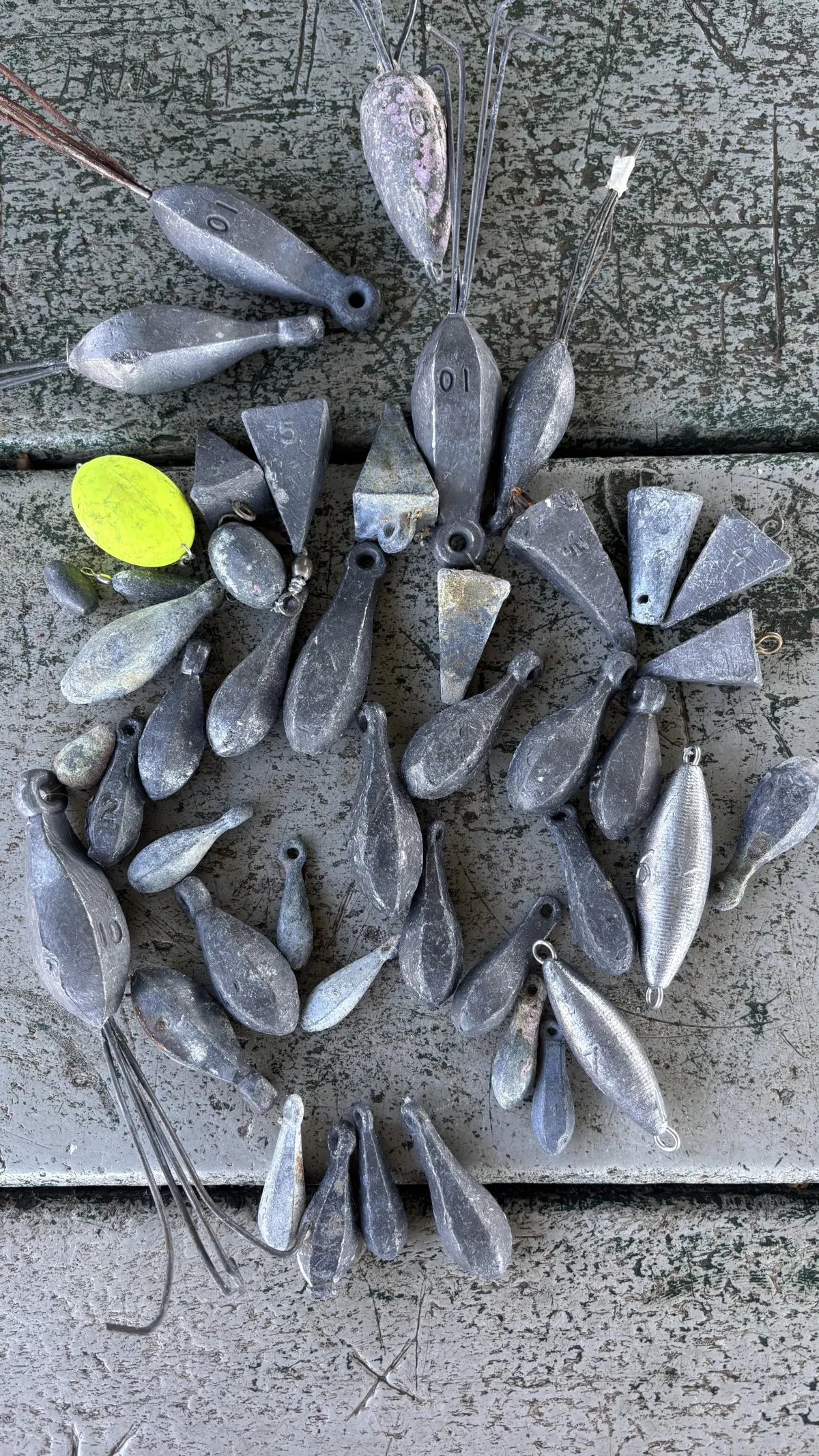
Fishing weights and lures collected through our Reef Cleaning Initiative are redistributed to the local fishing community for reuse. As we continue to locate, remove, and recycle more items from the reef, we are assisting in lowering the number weights and lures purchased and produced.
Source: Elhacham, Emily, et al. "Global Human-Made Mass Exceeds All Living Biomass." Nature, vol. 588, no. 7838, 17 Dec. 2020, pp. 442–444., https://doi.org/10.1038/s41586-020-3010-5.
Happy World Sea Turtle Day!
06/16/2026 - By: Kaitlyn Broussard
It is estimated that over one million marine animals are killed by 52.1 metric tonnes of plastic waste and other human-made debris each year, including thousands of sea turtles due to entanglement and plastic ingestion.
The UN World Ocean Assessment brings a terrifying reality to light that there are approximately 24.4 trillion microplastic particles circulating in the upper water column causing marine life to constantly ingest toxic synthetic material. This invisible pollution alters feeding habits, metabolism, immune functions, and reproduction across the entire marine system.
How can we help? Reducing our use of single-use plastics can have a significant impact!
Source:United Nations. "The Third World Ocean Assessment." United Nations, 8 June 2026, https://www.un.org/sustainabledevelopment/blog/2026/06/press-release-as-ocean-pressures-mount-united-nations-report-calls-for-urgent-global-collaboration-to-protect-marine-ecosystems/.